Collect your natural supplies
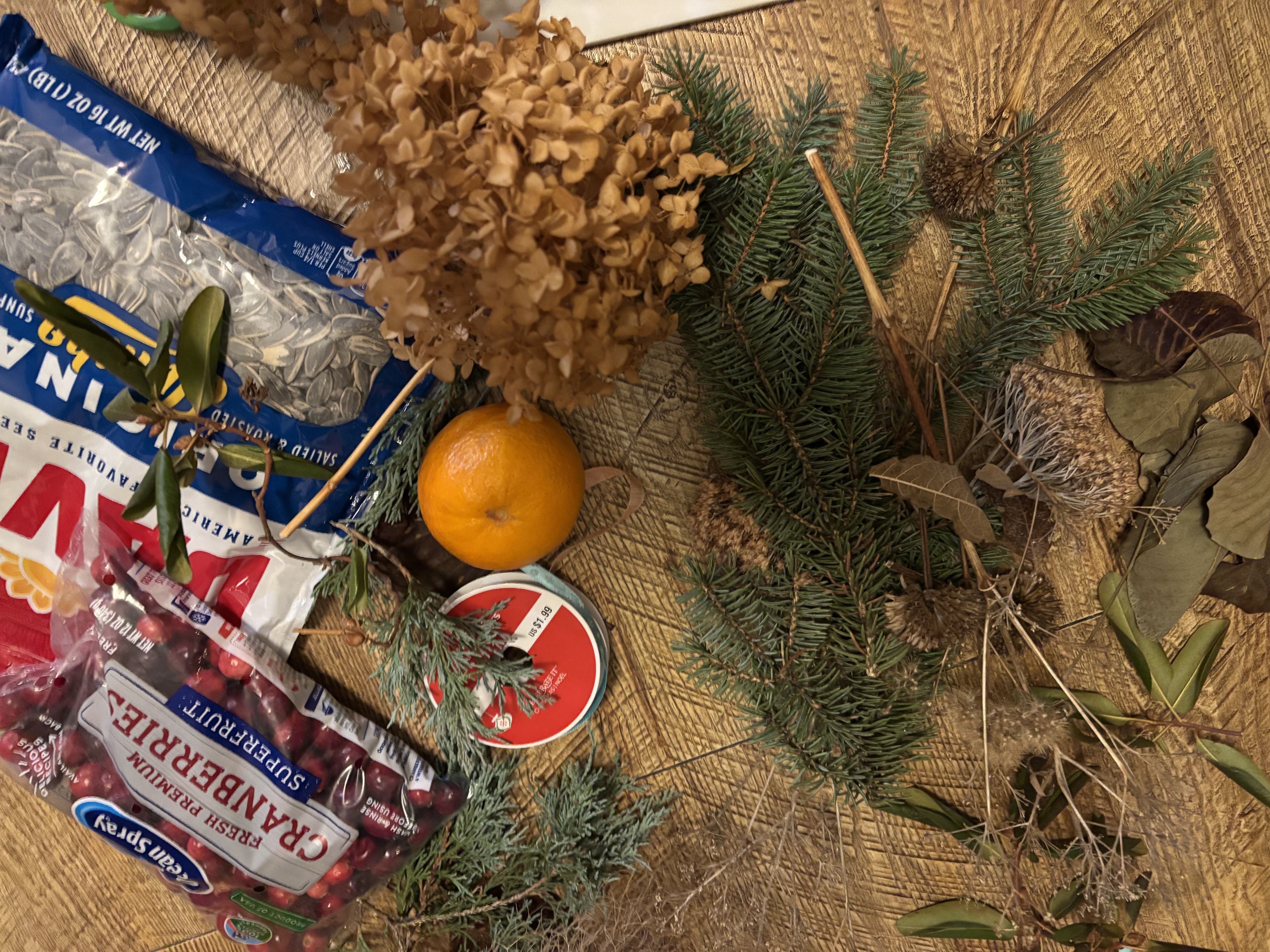
Take a nature walk and collect seeds, leaves, pine boughs, nuts, dried flowers, and other natural items to make your ornaments with. Remember, to obey the rules of collecting these items in your location. While it may be fine to collect items from your yard, many public parks have strict rules about collecting natural items, even things that have already fallen to the ground.
Add water
Fill muffin tins about halfway with water. You don't want to fill them all the way up, or there won't be room for your nature items or for the water to expand as it freezes.
You can also use silicone molds, donut pans, or mini bread pans.
Did you know: Most liquids take up less space (aka volume) when they freeze, but water actually gets bigger when it turns to ice!
Decorate your ornaments
Place your found objects into the water and arrange them like a collage, if you can get them to stay put!
OBSERVE: Some objects will sink, and others will float! Let's think like a scientist: What do all the objects that float have in common? Before you add the next new type of supply, predict if it will sink or float.
Add hangers
Cut a piece of string, yarn, or ribbon 5-8 inches long for each ornament, longer if you used a very large mold. Place both ends of the string into each mold.
Freeze
If it’s below 32°F, place your molds outside for at least four hours somewhere protected from squirrels and birds.
If it’s not below freezing, pop the tray into your freezer.
Think like a scientist: Will molds with more water freeze faster or slower? Do any ingredients seem to change how quickly the water froze?
Check on your molds every 30-60 minutes if you can to see how they're changing as they freeze.
Scientists have observed that containers with more water typically take longer to freeze because water is an excellent insulator, but the shape of your molds will matter: shallow molds have more surface area than deeper molds, which may help them freeze faster.
Some ingredients (like store-bought sunflower seeds) may contain salt, and salt lowers the freezing temperature of water. Sugar can also lower the freezing point a bit, so ornaments with more fruit may take longer to freeze than those with mostly leaves and seeds.
Do your observations match what scientists would predict? If not, what do you think influenced your results?
Remove from the molds
Let the tray sit on a warm countertop for a few minutes, then gently tug on the ribbon or yarn to release the frozen ornaments.
If they don’t pop out easily, run the bottom of the molds under warm water until they release.
Hang outside and observe
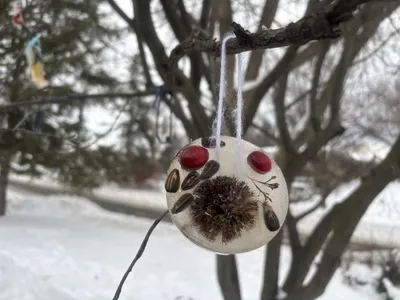
Hang your ornaments on tree branches and watch what happens over the next few days as sunlight, wind, and hungry winter visitors shape them and the neighborhood around them.
Predict: Which nuts or berries will the animals eat first?
Why do you think they'll choose those first? What does this tell you about the kinds of things the animals in your neighborhood like to eat?
Did you know that many species of evergreen, including white spruce, boxwood, and some juniper bushes, have an unpleasant smell similar to cat urine? This smell is the plant’s defense mechanism to keep it from being eaten by plant-eating herbivores like rabbits. Including these plants in your ornaments may make them last longer, but may not make your neighborhood animals as excited!